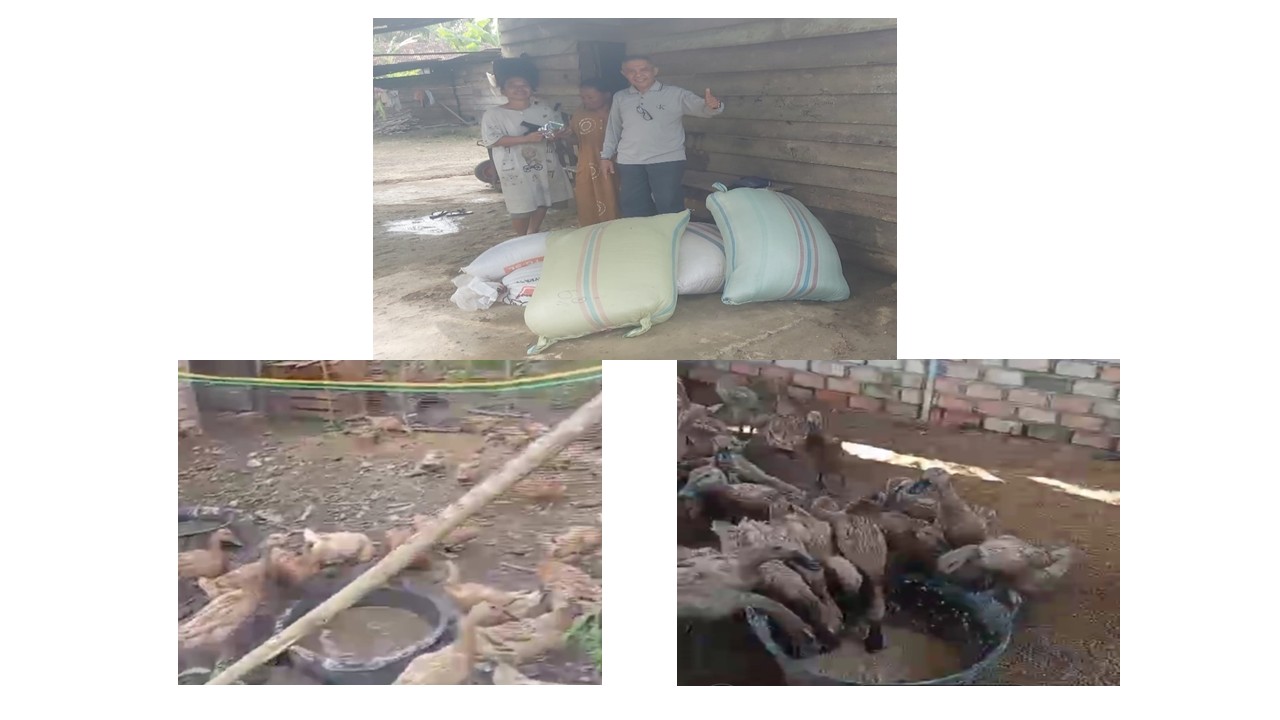
Empowerment of KWT Anggrek in the Implementation of Integrated Eco Farming of Rice and Ducks in Selat Village, Pemayung District
DOI:
https://doi.org/10.22437/w5sdzv49Keywords:
Eco Farming, Rice, DucksAbstract
The problem with duck cultivation in Selat Village is a lack of knowledge. An alternative that can be done is through the application of the eco farming model of rice-duck integration. The advantages of farmers who graze ducks in rice fields, (1) Get organic fertilizer, (2) reduce weeds such as golden snails, (3) reduce pesticides and (4) stimulate rice growth., (5) the combination of the rice-duck system can reduce production costs , increasing rice production and recommending environmentally friendly technology. The service activities aim to increase the knowledge and skills of KWT members in integrated rice-duck cultivation by maintaining rice productivity, as well as reducing the use of agrochemicals and maintaining environmental sustainability. PKM activities start from location surveys, discussions with the KWT Chair and its members to find problems and find solutions, socialization, skills training, counseling, demonstrations of implementing cooperative eco farming. Mojosari type duck seeds were obtained from duck breeders in Golden Bridge, totaling 30 individuals aged between 5 - 6 months who were ready to lay eggs with an average weight of 1.4 - 1.6 kg. The results of community service activities show an increase in participation from KWT Anggrek members to develop duck farming. Group members regularly learn how to cultivate ducks by attending training and looking for information on social media or the internet. Success in running a business is influenced by knowledge and entrepreneurial motivation factors. For the sustainability of the duck cultivation business, it is necessary to build partnerships with other parties, especially to overcome the problem of limited capital in business. It is hoped that there will be assistance with facilities and infrastructure for duck cultivation.
Downloads