Introduction and Implementation of ASU Feed Made from Trash Fish for Village Chickens at the Raudhatul Muhajirin Islamic Boarding School, Muaro Jambi Regency in the context of Accelerating Food Security
DOI:
https://doi.org/10.22437/466wgn23Keywords:
anative chicken; discarded fish; Pondok Pesantren Raudhatul Muhajirin; santriAbstract
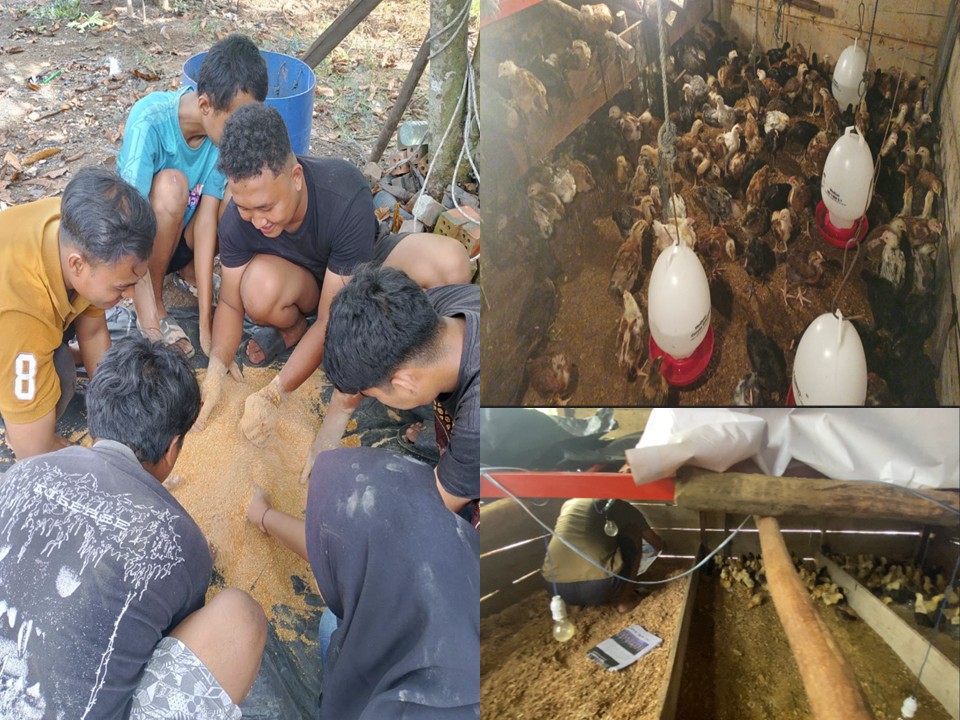
To accelerate food security, it is essential to involve various stakeholders, particularly the younger generation in the agricultural and livestock sectors, which are critical for this cause. Engaging young people can be enhanced by educating them on the promise of the livestock sub-sector and the potential career opportunities available in livestock farming. To foster this involvement, a community service initiative was conducted at the Raudhatul Muhajirin Islamic Boarding School in Muaro Jambi Regency. This initiative aimed to introduce and implement ASU (Safe, Healthy, and Complete) feed made from trash fish for free-range chickens. The ASU feed consists of corn, bran, and trash fish, which is fermented with Effective Microorganisms 4 (EM4) for nine days. During this program, 300 two-week-old free-range chickens, raised by the students, were given the ASU feed with guidance from students of the Faculty of Animal Science at the University of Jambi who participated in the service activity. The results indicated a strong interest among the students in learning about livestock farming and how to produce ASU feed tailored to the needs of free-range chickens. After eight weeks of rearing, some of the native chickens reached a weight of 900 grams. This outcome demonstrates that the ASU feed is high quality and capable of meeting the nutritional requirements for the growth and meat production of native chickens. In conclusion, ASU feed made from trash fish can significantly enhance the performance of native chickens and improve students' understanding of how to raise them effectively.
Downloads
Downloads
Published
Issue
Section
License
Copyright (c) 2025 Jurnal Pengabdian Aplikasi Teknologi dan Ilmu

This work is licensed under a Creative Commons Attribution 4.0 International License.